- Home
- How Hypnotherapy May Help
Evidence-aware, plainly stated
How Hypnotherapy May Help
What hypnosis generally involves, which techniques may be used for public speaking confidence, the myths worth setting aside — and a clear statement of what this approach does not claim to do.
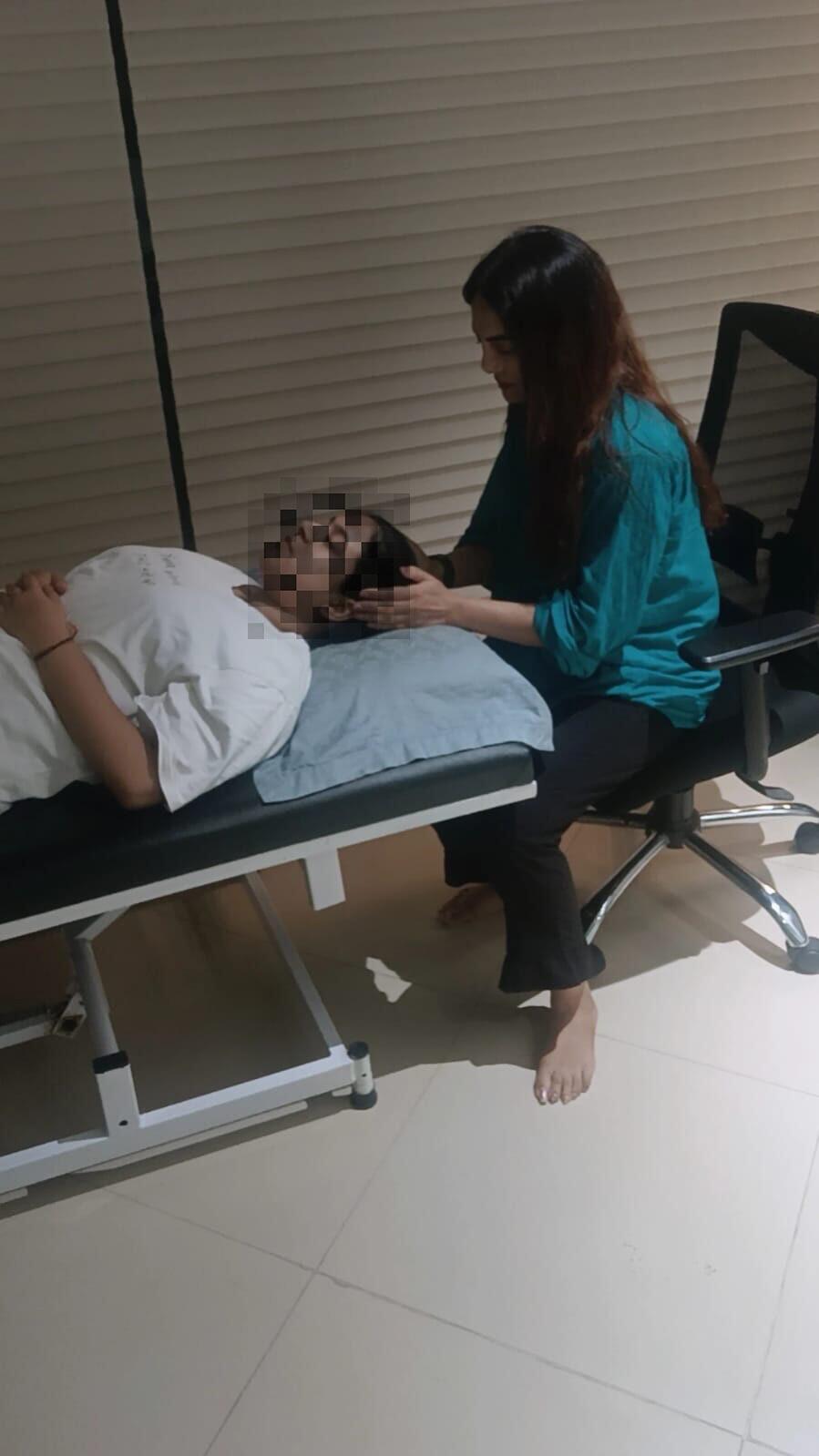
First principles
What hypnosis generally involves
Descriptions of hypnosis vary, and the experience itself varies between people. What follows is a careful, general account — not a promise about what you personally will experience.
Focused attention
Attention narrows towards what is being described and away from competing demands. Most people recognise something similar from ordinary life — becoming absorbed in a book, a film or a long familiar drive.
Increased absorption
Imagery tends to be engaged more fully than in ordinary conversation. Describing a room, a doorway or a moment of speaking can be experienced more vividly than simply thinking about it.
Relaxation, where appropriate
Physical relaxation is common but not universal, and it is not the purpose. Some approaches are alert rather than relaxed. Relaxation is a tool that may be used, not the definition of the work.
Retained awareness
People generally remain aware of where they are and what is happening, and able to speak, move, ask a question or stop. It is not sleep, and it is not unconsciousness.

You choose the depth
Nothing is used without being explained and agreed first. If a technique does not suit you — for any reason, including no particular reason — it is set aside and something else is considered.
Applied to speaking
Techniques that may be used
In a public speaking context, hypnotherapy is generally directed at the response a person carries into the room. These are the elements most often drawn on, selected according to the individual.
Therapeutic suggestion
Constructive suggestions, agreed in advance, oriented towards steadiness, clarity of thought and a sense of having a legitimate right to speak. Suggestions are collaborative — they are discussed and worded with you, not imposed on you, and they cannot make you act against your values or judgement.
Guided imagery
Detailed description of a scene, used to give the imagination something specific to work with. For speaking, that might be the physical route into a room, the moment of being introduced, or the experience of a steady first sentence.
Confidence-oriented mental rehearsal
Rehearsing the sequence of an event as you would prefer to experience it — including the ordinary imperfections. Rehearsing recovery from a stumble is treated as more useful than rehearsing an impossible flawless run.
Exploring personal patterns
Where it is appropriate and welcome, looking at earlier experiences that may have contributed to the present response. This is done gently and at your pace; it is never a requirement of the work, and it is not pursued where it would not be helpful.
Reframing unhelpful responses
Considering whether a long-held conclusion — "I always blank", "everyone can see it" — is accurate today, and what a more balanced reading would be. The aim is accuracy rather than forced positivity.
Building constructive associations
Working with the cues that currently trigger a strong response, with the intention of attaching a steadier state to them over time. The goal is not the absence of activation, but a different interpretation of it.
Clearing the ground
Myths and facts
A good deal of what people believe about hypnosis comes from entertainment. These are the four misunderstandings that come up most often.
"I will lose control."
Hypnotherapy is best described as a collaborative therapeutic process. People generally remain aware of what is happening and retain the ability to speak, move, ask questions or stop. The experience differs between individuals — some describe deep relaxation, others simply concentrated focus — but a loss of control over your own judgement is not a feature of ethical practice.
"The therapist controls my mind."
Ethical therapeutic practice depends on your participation and consent throughout. What is proposed is explained beforehand and agreed with you, and you can decline or pause at any point. Sensational portrayals of control belong to stage entertainment, not to therapeutic work.
"One session will permanently solve everything."
Individual experiences vary and no specific outcome can be guaranteed. Some people notice shifts early; others find that useful change accumulates gradually alongside real-world practice. Any promise of a permanent result from a single session should be treated with caution.
"Hypnotherapy will cure my anxiety."
Hypnotherapy is not presented here as a cure for anxiety, phobias, depression or any medical condition, and it does not replace appropriate professional care. It may be a supportive approach that helps some suitable individuals work with confidence, learned responses and self-limiting beliefs connected to speaking.
In the room
What a session may involve
There is no fixed script, and sessions are adapted to the person in front of them. In broad terms, however, most follow a recognisable shape.
- Conversation first. What is difficult, what you have tried, what you would like to be different.
- Explanation. What is being proposed, why, and what it will be like — before anything begins.
- Agreement. Your questions answered and your consent given, with the option to adjust or decline.
- The therapeutic work. Guided attention, imagery and suggestion, at a pace that suits you.
- Return and discussion. Time at the end to talk about what you noticed, in your own words.
- Between sessions. Where useful, something practical to work on — often rehearsal rather than theory.

Stated plainly
The limits of this approach
A responsible description of any therapeutic approach includes what it cannot do. These statements are not disclaimers added at the end — they are part of how the work is offered.
Hypnotherapy is not a treatment for any medical condition, and nothing on this site should be read as a medical or psychological claim.
It is not a substitute for emergency care, medical treatment, or appropriately qualified mental health support where those are needed. It may, in some situations, sit alongside them.
No specific outcome can be promised, in any number of sessions. Suitability, response and pace all differ between individuals.
Some people and some situations are better served by other forms of support. Where that is the case it will be said openly rather than worked around.
Speaking is a skill. Therapeutic work may support the state you bring to it, but the skill itself is built by speaking.
If you need support now
If you are experiencing severe or persistent distress, or you are concerned about your safety, please contact an appropriately qualified healthcare or mental health professional, or your local emergency services. Hypnotherapy is not an emergency service and should not be relied upon as one.
Have a question about any of this?
Ask before you decide anything
You are welcome to get in touch simply to ask whether this approach makes sense for your situation. There is no obligation attached to that conversation.