1. Home
  2. The Hypnotherapy Process

Step by step

The Hypnotherapy Process

Six stages that describe how work on public speaking is commonly shaped. It is a shape, not a schedule: the order can change, stages can repeat, and what actually happens depends on what you need.

No fixed session count Explained before it is used Adjusted as you go
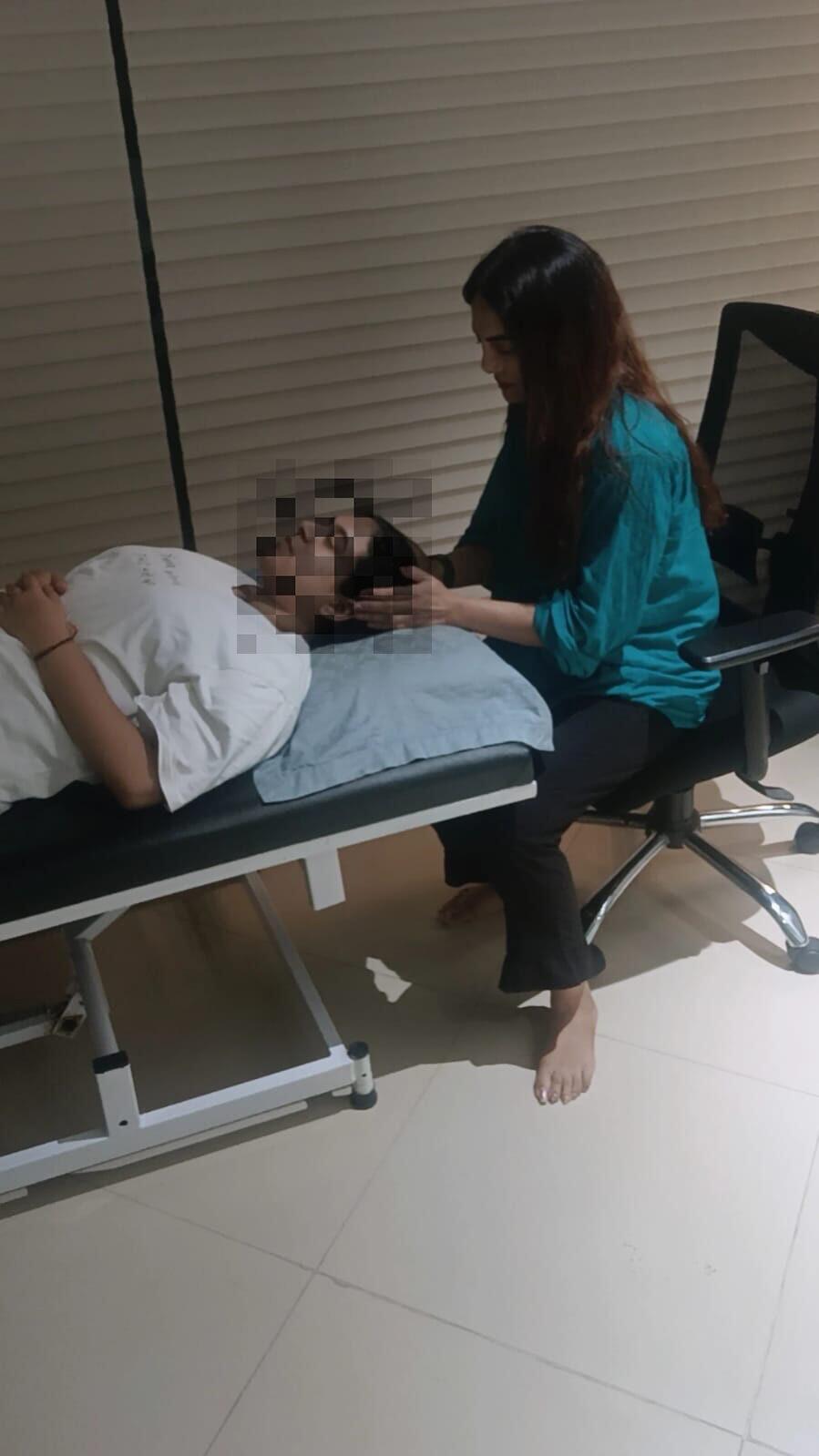
A hypnotherapy session in progress, with Vibha Jain seated beside a reclining client in a quiet room.
The client's identity has been obscured in this photograph for privacy.

Nothing here is done to you without being explained first. If at any point a stage does not suit you, it is adjusted or set aside — and saying so is treated as useful information, not as a problem.

Initial discussion

A conversation about what brings you here. What happens when you have to speak? Which situations are difficult, and which are not? How long has it been this way, and what has changed recently? There is no requirement to have it neatly summarised — describing it badly is a perfectly good start.

This is also where your questions get answered: what hypnotherapy involves, what it does not claim, and whether it seems like a reasonable fit for what you are describing.

In practice

  • Your description of the difficulty, in your own words
  • What you have already tried, and what it changed
  • What you would like to be different, specifically
  • Any questions or reservations about the approach

Understanding your speaking goals

Vague goals produce vague work. "More confidence" is a direction; "being able to open our Monday meeting without my voice tightening" is something you can actually aim at and later recognise.

Goals are also worth checking for realism. Never feeling nervous again is not a reasonable target for anyone. Feeling nervous and speaking anyway, with the nerves at a manageable level, usually is.

A person at a desk reviewing a weekly calendar on a laptop screen.
Where a specific event is coming up, the available time shapes what is realistic.

Exploring relevant patterns and experiences

Where it is appropriate and welcome, this stage looks at how the pattern took shape: earlier experiences, the conclusions drawn from them, and what has kept those conclusions in place since.

This is exploration, not excavation. There is no requirement to revisit anything you would rather not, and useful work is entirely possible without it. Where a memory does come up, the pace is yours.

Often useful to notice

  • What happens first — a thought, a sensation, or an image
  • Which specific settings trigger the strongest response
  • Occasions that went better than expected, and why
  • What you tell yourself afterwards, and how fair it is

An individualised hypnotherapy approach

How hypnotherapy will be used is explained and agreed before it is used. Depth, pace and language are adjusted to what feels acceptable to you, and you retain the ability to pause, ask a question or stop at any point.

What is appropriate differs from person to person. Some people work primarily with imagery, others mainly with suggestion, others with a mixture. There is no single correct version of this.

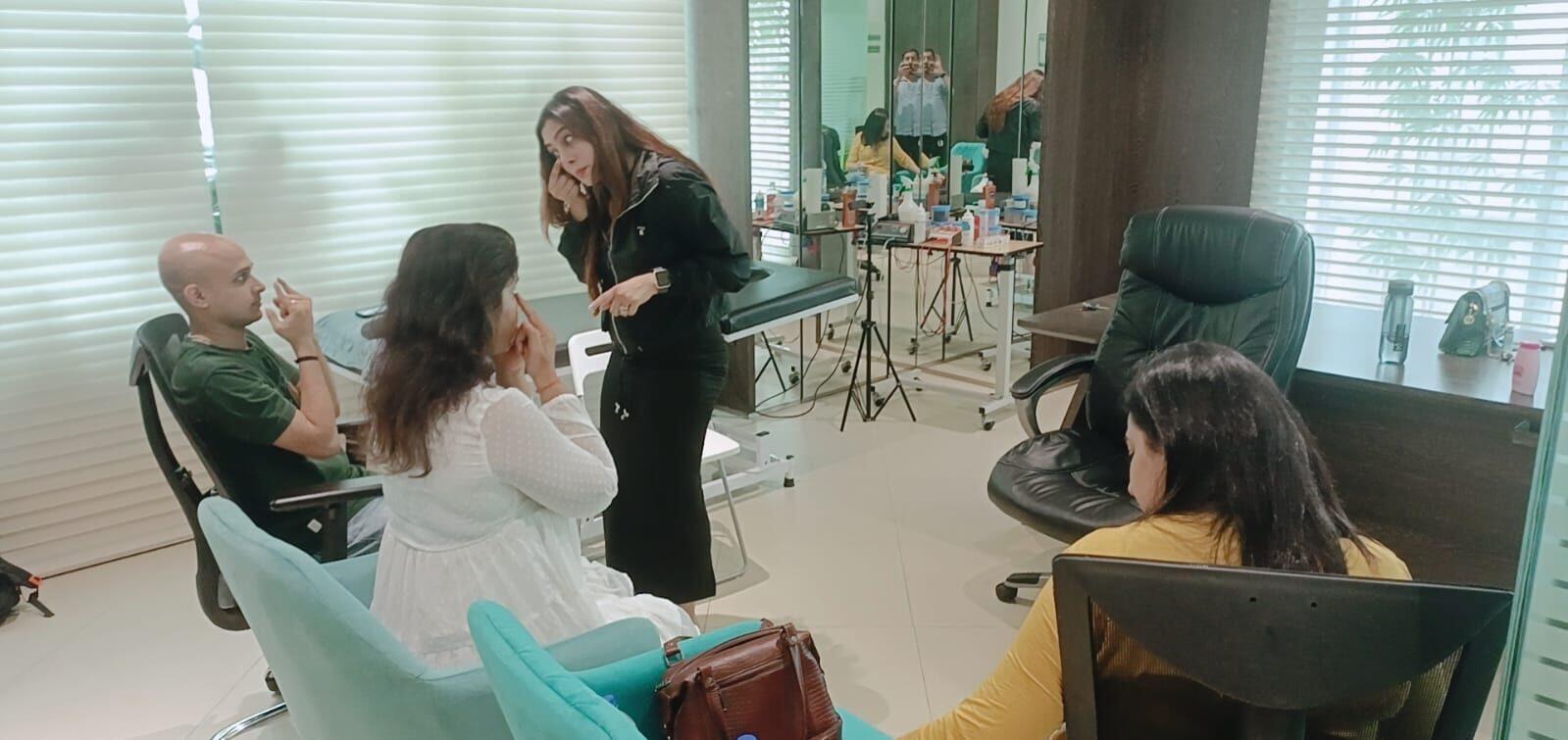
Vibha Jain standing and explaining an approach to three seated clients in a consulting room.
Explaining what is being proposed, before proposing it.

Mental rehearsal and confidence-oriented work

Guided rehearsal of the real sequence: arriving, waiting, being introduced, the first breath, the first sentence, a pause, a question you cannot immediately answer, and finishing. Rehearsing recovery matters at least as much as rehearsing fluency.

This is intended to support real practice, never to replace it. Imagination prepares the response; speaking aloud builds the skill.

Commonly rehearsed

  • The walk to the front and the first ten seconds
  • A memorised opening line that needs no notes
  • Losing your place — and calmly finding it again
  • Ending cleanly instead of trailing off

Reflection and continued practice

After a real speaking occasion, what actually happened is reviewed — not what you feared would happen. This matters more than it sounds, because anxiety writes an unreliable account of events, and that account becomes the memory that shapes the next occasion.

From there you decide together what is useful next: continuing, spacing sessions further apart, focusing on practical preparation, or stopping.

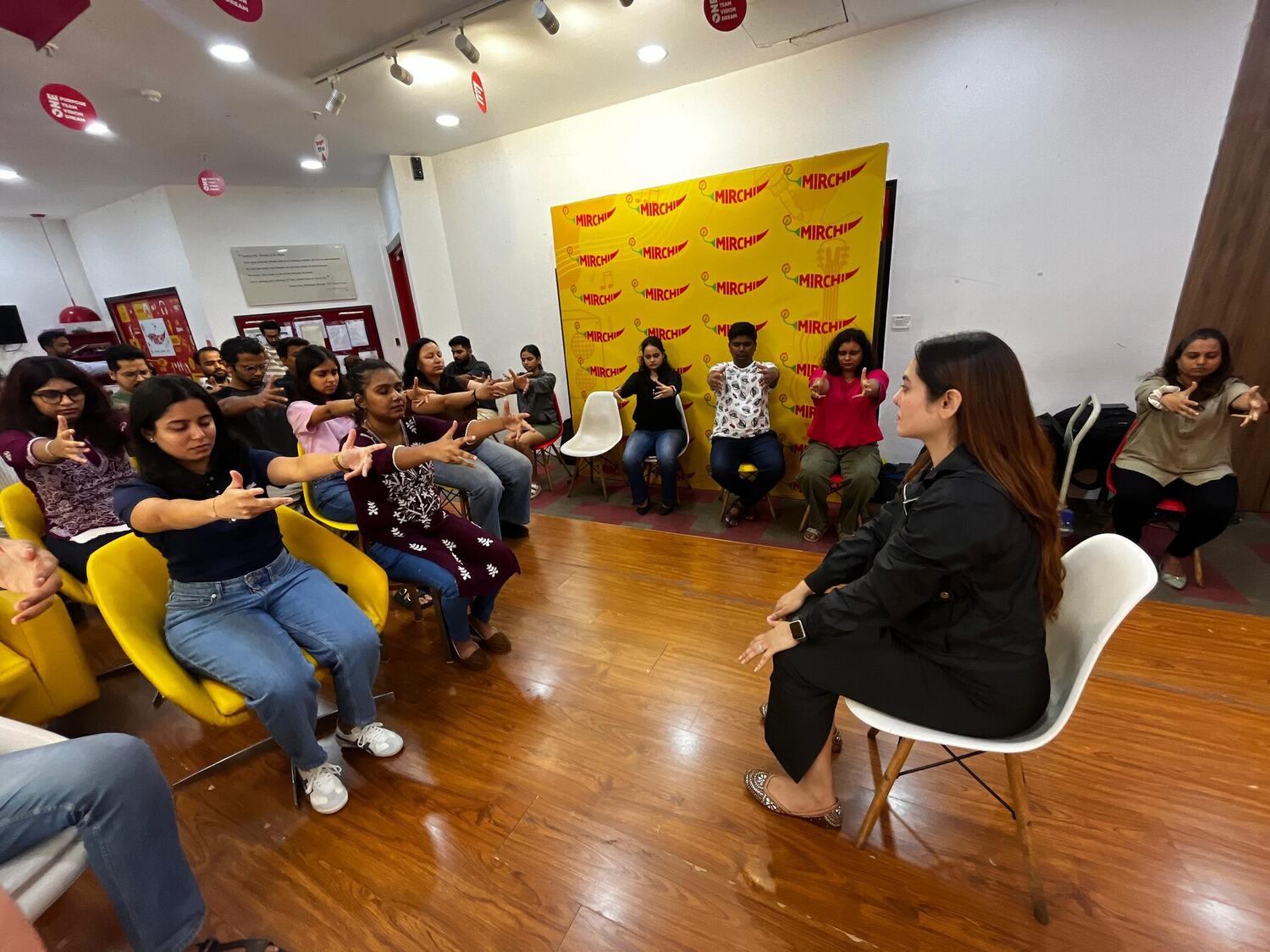
A wide view of a group session with participants seated in a semicircle following a guided exercise.
For some people, group settings offer a lower-stakes place to practise.

A question everyone asks

"How many sessions will this take?"

The honest answer is that it is not fixed in advance. It depends on what you are working with, how long the pattern has been in place, what you would like to be different, and how you respond — none of which can be known before you begin.

A specific number promised at the outset would be a sales figure rather than a clinical judgement. What can be offered instead is a review as you go: what has changed, what has not, and whether continuing is worthwhile.

What shapes the length of the work

  • How specific the goal is. A single upcoming presentation is a narrower task than a lifelong pattern.
  • How long it has been in place. Longer-standing responses often involve more layers.
  • How much real practice is available. Regular speaking opportunities tend to accelerate progress.
  • How you respond. This varies considerably and cannot be predicted in advance.
  • What else is going on. Where other difficulties are present, other support may need to come first.

Between sessions

The part that happens without me

Most of the useful change happens outside the room. What is suggested between sessions is usually small, specific and practical rather than theoretical — and it is agreed with you rather than assigned.

Notice and note

A short record of speaking moments: what happened, what you expected, and how the two compared.

Rehearse aloud

Saying the words out loud, standing up, at full volume. Silent reading rehearses a different skill entirely.

Practise the settling

Brief, regular practice of a breathing or focusing pattern, so it is familiar before you need it.

Take a small opportunity

One question in a meeting, one comment in a group — gradual and chosen, rather than dramatic.

Ready when you are

The first step is only a conversation

Get in touch to describe what you are finding difficult. Nothing is committed to at that point, and there is no obligation to continue.