- Home
- Who May Benefit
Nine situations people bring
Who May Benefit
Difficulty with speaking does not belong to one kind of person or one kind of room. Below are nine situations people commonly describe, what each one tends to involve, and where support may usefully focus.

The common thread
In almost every case the difficulty is not with speaking itself — most people can explain their subject fluently to one trusted colleague. It is with being evaluated while speaking. That distinction matters, because it tells you where the work actually needs to go.
At work
Professionals presenting to clients
Client-facing work adds a particular pressure: you are not only presenting information, you are representing an organisation, and a commercial outcome may follow. People often describe being fine in internal rehearsal and losing fluency the moment the client joins the call.
Support may focus on: separating the performance from the outcome, rehearsing openings and handovers, and working with the belief that a single stumble undoes credibility.
Employees speaking up in meetings
This is the most common difficulty of all, and the least visible. There is no stage and no audience — just eight familiar faces and a point you decided not to make. Because nothing dramatic happens, it is rarely named as a problem, and it can quietly shape a career for years.
Support may focus on: the fear of being wrong in front of colleagues you will see again tomorrow, and building a habit of contributing early rather than waiting for a perfect moment.
Managers leading teams
Leading brings an extra layer: people are reading you for reassurance as much as for information. Many managers describe being comfortable with content and uncomfortable with the expectation of steadiness — particularly when delivering news they did not choose.
Support may focus on: the pressure to appear certain, speaking honestly without over-explaining, and holding a room during silence.

Most people are not trying to become brilliant speakers. They are trying to stop losing access to what they already know.
Building something
Entrepreneurs pitching ideas
Pitching concentrates a great deal into a few minutes, and founders often carry the additional weight of the idea being personal. A critical question can land as a judgement of the work, of the plan, and of the person who made it.
Support may focus on: tolerating scrutiny without contracting, keeping the opening steady when time is short, and separating a hard question from a verdict.
Executives addressing larger audiences
Seniority does not remove speaking anxiety; it often relocates it. Larger audiences, recorded sessions and the expectation of authority can make the stakes feel higher rather than lower — and there is frequently no one senior to admit it to.
Support may focus on: speaking to scale without becoming stiff, working with the discomfort of being recorded, and reducing over-rehearsal that flattens delivery.
Teachers, trainers and facilitators
People who speak every day are sometimes surprised to find particular audiences difficult — a hall of parents, an observed lesson, a session for peers. Familiar competence in one setting does not automatically transfer to another.
Support may focus on: the shift from teaching to being assessed, managing the sense of being watched by equals, and recovering quickly when a session goes off plan.
Workplaces and groups
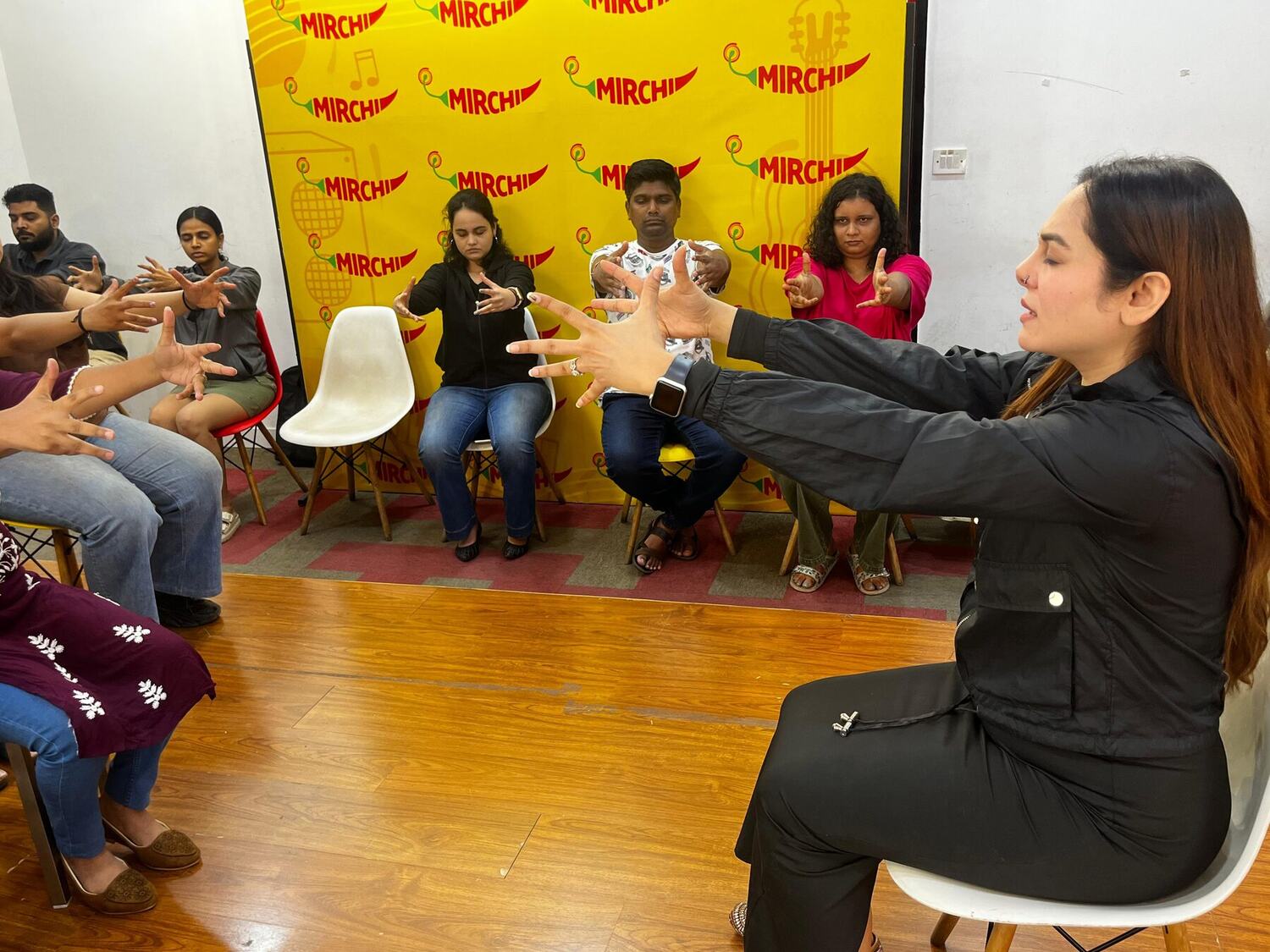
Speaking difficulty is often widespread within a team and almost never discussed. Group sessions and workshops give people a setting in which the difficulty is named openly and practised alongside others, rather than alone and under observation.
Group and individual work are different in character. Which is appropriate depends on the situation, and group settings are not suitable for everyone or for every difficulty.
Studying, applying, creating
Students facing classroom presentations
For many students the marks are the smaller worry. The larger one is peers — people you will sit beside afterwards, whose reaction is immediate and visible. Avoidance at this stage can quietly set a pattern that follows someone into working life.
Support may focus on: the fear of visible embarrassment among peers, preparation that does not depend on memorising every word, and rebuilding after one bad experience.
Job candidates preparing for interviews
Interviews combine everything difficult about speaking with a decision that matters. Candidates often describe knowing the answer and hearing themselves deliver a worse version of it — the familiar effect of attention divided between answering and self-monitoring.
Support may focus on: steadying the first two minutes, thinking aloud without panic when a question is unexpected, and letting a pause be a pause.
Creators, and speaking at personal occasions
Speaking to a camera removes every cue an audience normally gives back — no nods, no faces, nothing to respond to — and adds permanence. Personal occasions bring a different weight: emotion, and an audience of people whose opinion genuinely matters to you.
Support may focus on: speaking to an imagined single listener, tolerating the absence of feedback, and preparing for moments where feeling and speaking overlap.
Worth saying
This approach is not right for everyone
Listing who may benefit would be incomplete without saying where a different form of support should come first. Suitability is discussed openly before any work begins.
Please seek professional assessment if
- Anxiety is severe, persistent, or affecting many areas of life beyond speaking
- You are experiencing panic attacks, or symptoms that are new or worsening
- Speaking difficulty occurs alongside other health concerns you have not had assessed
- You are in significant distress, or concerned about your own safety
Hypnotherapy is not a replacement for emergency care, medical treatment or appropriately qualified mental health support. In these situations, please speak with a qualified professional or your local emergency services.
Recognise your situation?
Describe it in a sentence or two
You do not need a diagnosis or a polished explanation to get in touch — just a description of what happens and what you would like to be different.